
Do you actually need to study phonetics to improve your Spanish pronunciation?
A study of 95 learners found something worth knowing. The answer might surprise you.
Lindy Avila
4/2/20262 min read


There's a common assumption in language learning: if you want to improve your pronunciation, you need to study it explicitly. Rules, diagrams, drills. Mouth position. Tongue placement. The technical stuff.
A study by Elizabeth M. Kissling at James Madison University looked at exactly this question with 95 Spanish learners across first, second, and third-year university courses. Half the group received direct phonetics instruction. The other half got structured listening and practice with similar input and feedback, but no explicit phonetics lessons at all.
Both groups improved their pronunciation equally.
It might be the input, practice, and feedback that matter most, not the explicit lessons themselves.
Here's what that means for how you practice, what you focus on, and how you think about progress.
What the research found
The hardest sounds aren't the stops.The three most challenging consonants for English speakers learning Spanish were the approximants: [β] as in boca, [ð] as in todo, and [ɣ] as in amigo. These sounds don't exist in English, which makes them harder to hear and produce consistently.
Explicit phonetics lessons didn't outperform focused practice.Learners who received structured listening, dictation, and feedback improved just as much as those who studied phonetics rules directly. Drilling isolated sounds isn't the only path forward.
Pronunciation practice pays off at every level.First, second, and third-year learners all responded similarly to pronunciation instruction. Starting early matters, but so does continuing the work.
Bilingual speakers make excellent models.The study used bilingual Spanish speakers as pronunciation models. Regular conversation with fluent Spanish speakers who also know English is genuinely useful for developing your ear and your output.
Being understood matters more than sounding native.The goal isn't a perfect accent. It's intelligibility and comprehensibility. Real communication with real people is the actual target.
What this means for your practice
You don't need a linguistics degree to improve your pronunciation. What you need is exposure to good models, consistent practice with real input, and feedback on what's actually landing.
Focused listening, dictation exercises, and conversation with fluent speakers aren't the consolation prize when explicit instruction isn't available. According to this research, they may be the core of what actually works.
At Linguaviva, we design training programs around exactly this kind of evidence: what research shows actually moves the needle for working professionals. Not abstract theory, not one-size-fits-all drills, but structured practice built around how communication really develops.
Source: Kissling, E. M. (2013). Teaching pronunciation: Is explicit phonetics instruction beneficial for FL learners? The Modern Language Journal, 97(3), 720–744.
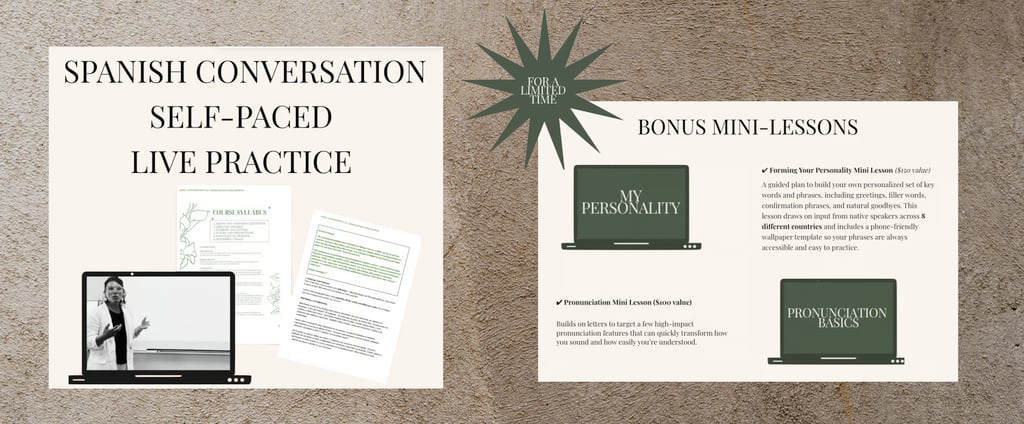
RIGHT NOW YOU CAN GET A FREE PRONUNCIATION MODULE WITH THE PURCHASE OF EITHER OF OUR SELF-PACED SPANISH COURSES.

© 2025. All rights reserved.